

The Project In Detail
The Research
The Kokolopori Bonobo Research Project (KBRP) was established by Dr. Martin Surbeck at the beginning of 2016 with the help of the Max Planck Institute and in collaboration with the local NGO (Vie Sauvage), the Bonobo Conservation Initiative (BCI), and the Congolese Ministry of Research.
The main topics of research include the dynamics of female coalitions, the role of females in appeasing intergroup conflict, the sociology of motherhood, the evolutionary dynamics alleviating male sexual coercion, female reproductive autonomy as means of female dominance, and much more.
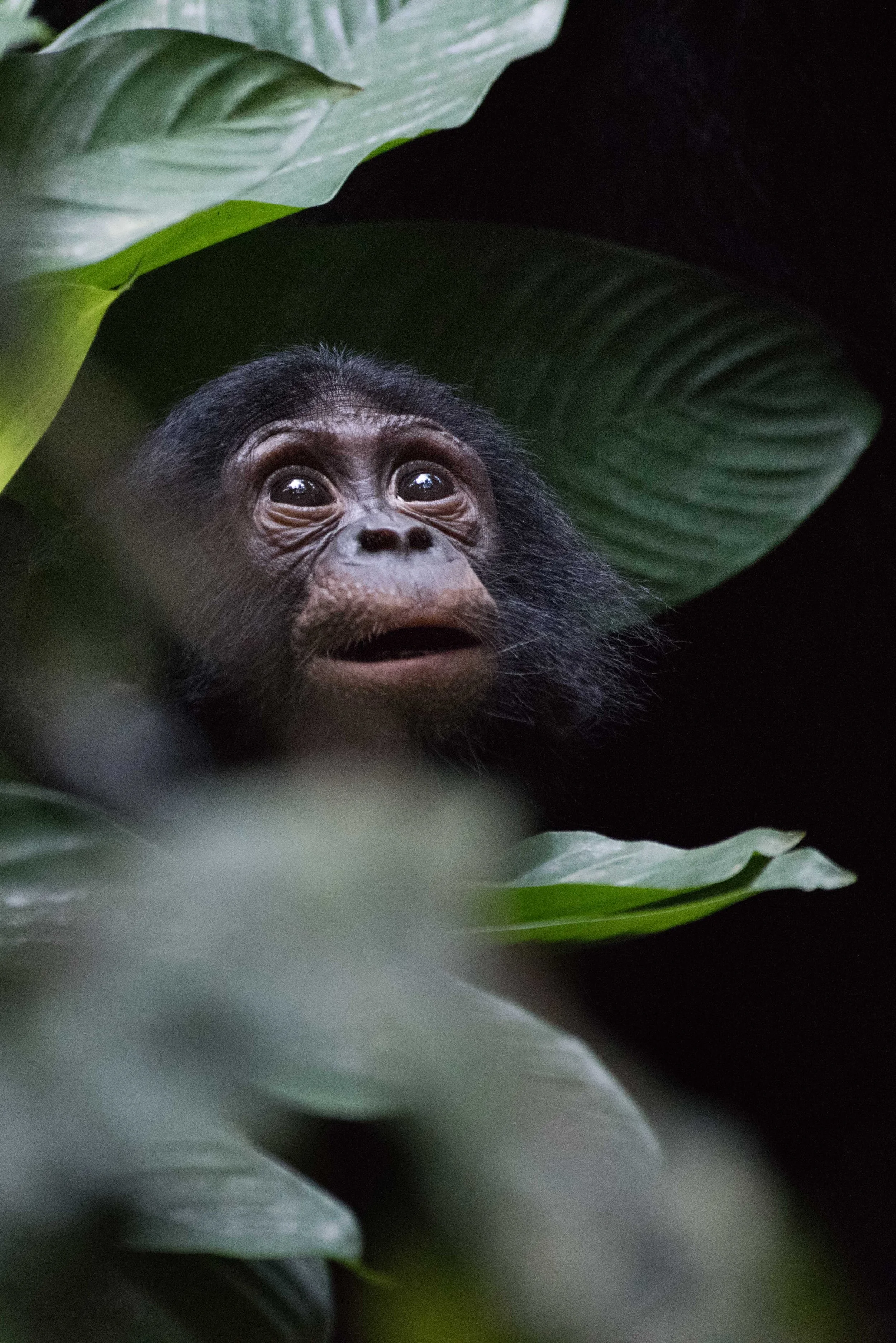
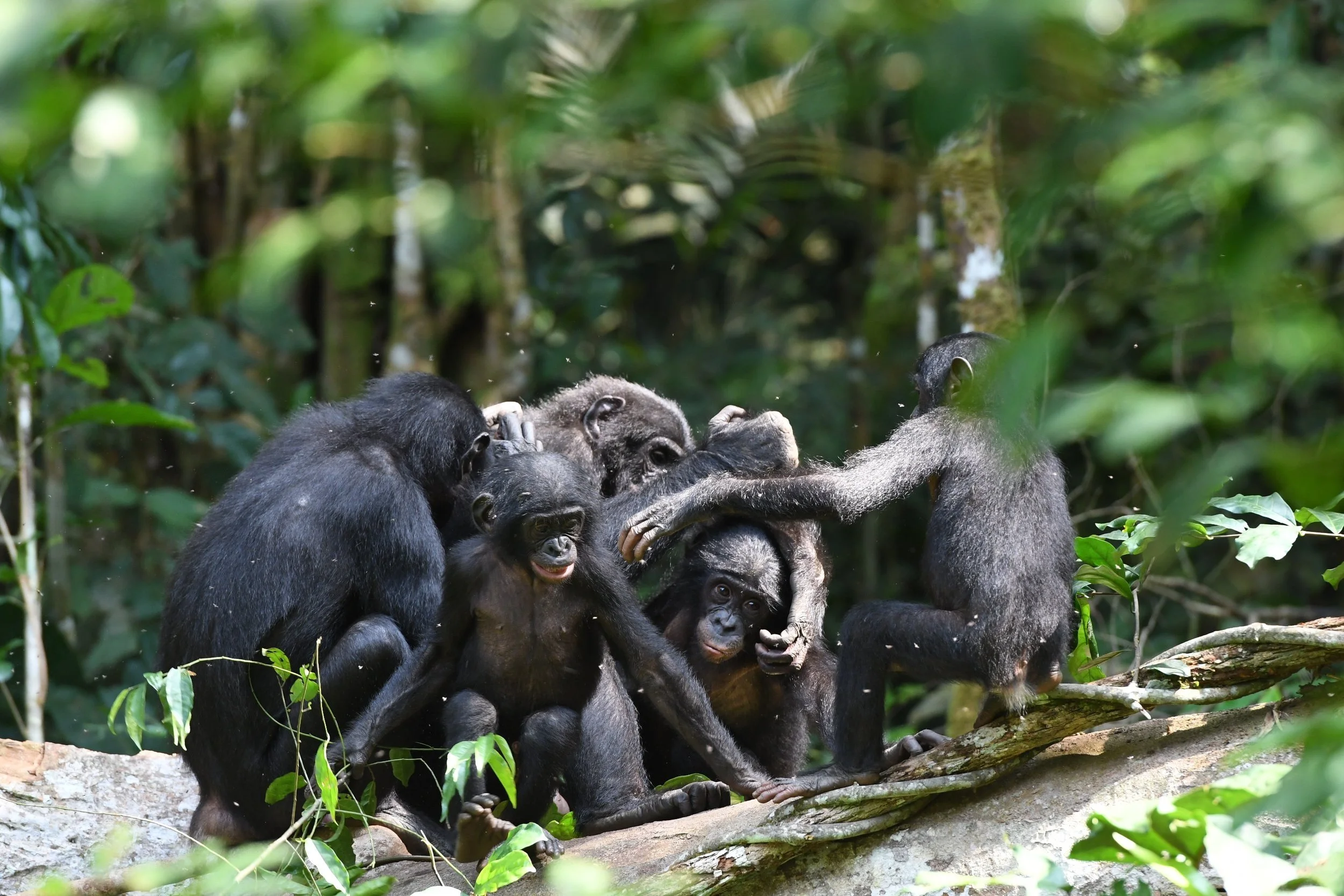
The bonobo is a species of great ape that shares nearly 99 percent of our DNA. Native only to the Democratic Republic of the Congo, they are often overshadowed by their more well-known chimpanzee cousins. In bonobos, females occupy high social status, and older females usually lead the groups. The species is known for the habitual use of sexual behavior to alleviate tension between members and for the absence of male sexual violence, homicide, and infanticide.
They provide us with the insight that male sexual violence and male dominance are not evolutionarily inevitable.
Local and International members of the Kokolopori Bonobo Research Project follow three different groups of bonobos, comprised of 90 individuals, every day.
We observe and record the behavior of Ekalakala, Kokoalongo, and Fekako groups. This data collection is the basis for the groundbreaking research that Kokolopori produces.
The Lonoa research camp is situated approximately 4 km from the nearest village in the Kokolopori Bonobo Reserve, a community-based nature reserve officially established by the Congolese government in May 2009.

How we do the work
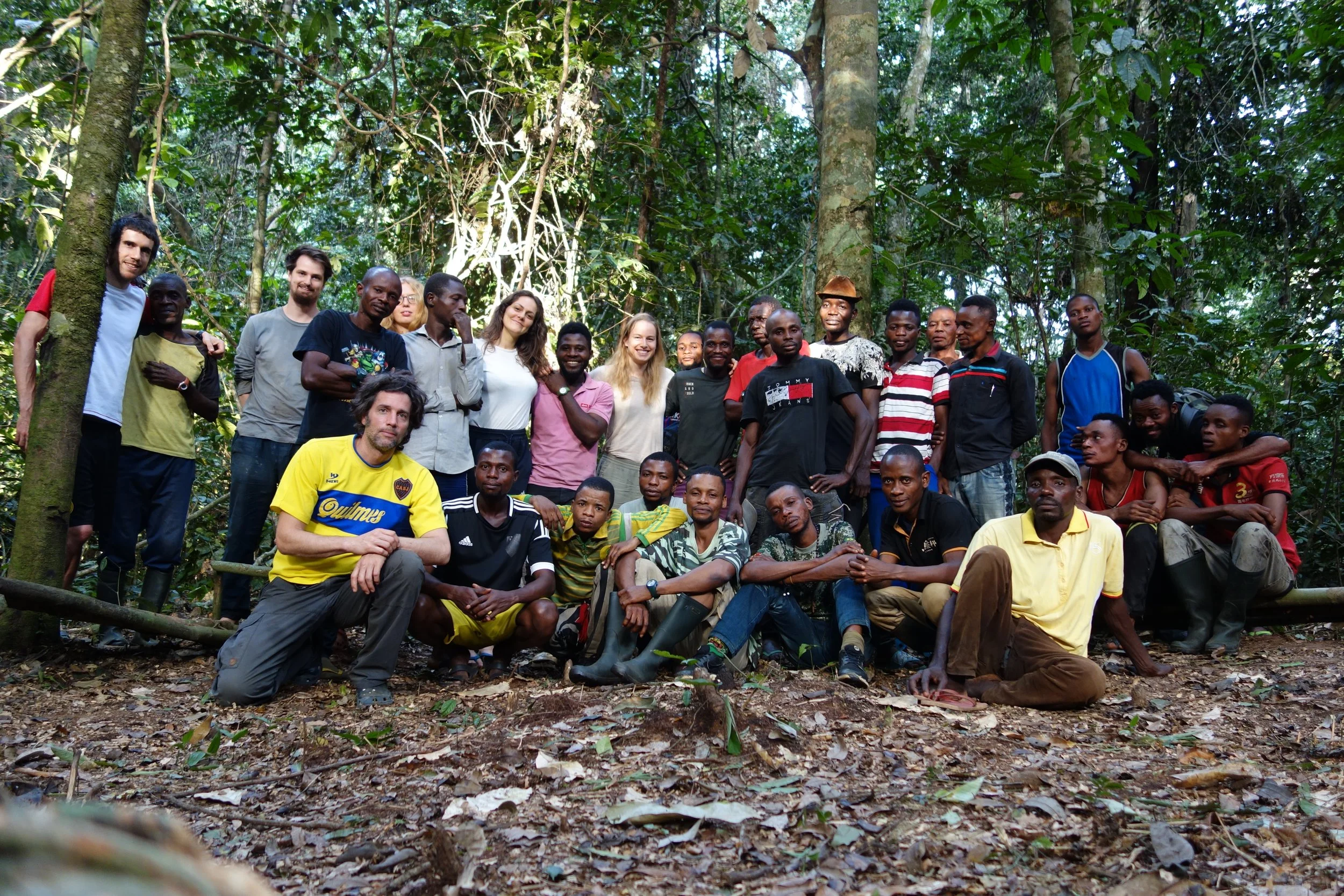
Working with people from the surrounding villages, we create local employment and seek for ways to cooperate with them in an ecologically sustainable use of the forest. Providing employment is important as the area is not served in any way by the government or the private and public sectors. There is no infrastructure. People live in extreme poverty, and daily hunger and chronic sickness is their reality.
We are careful to employ people from all five villages, spreading the economic employment opportunity equally across clans.
We track the bonobos in mixed teams comprising local people and international researchers. Because bonobos are so closely related to us, we can easily catch each other's respiratory diseases. We, therefore, wear masks in the forest.
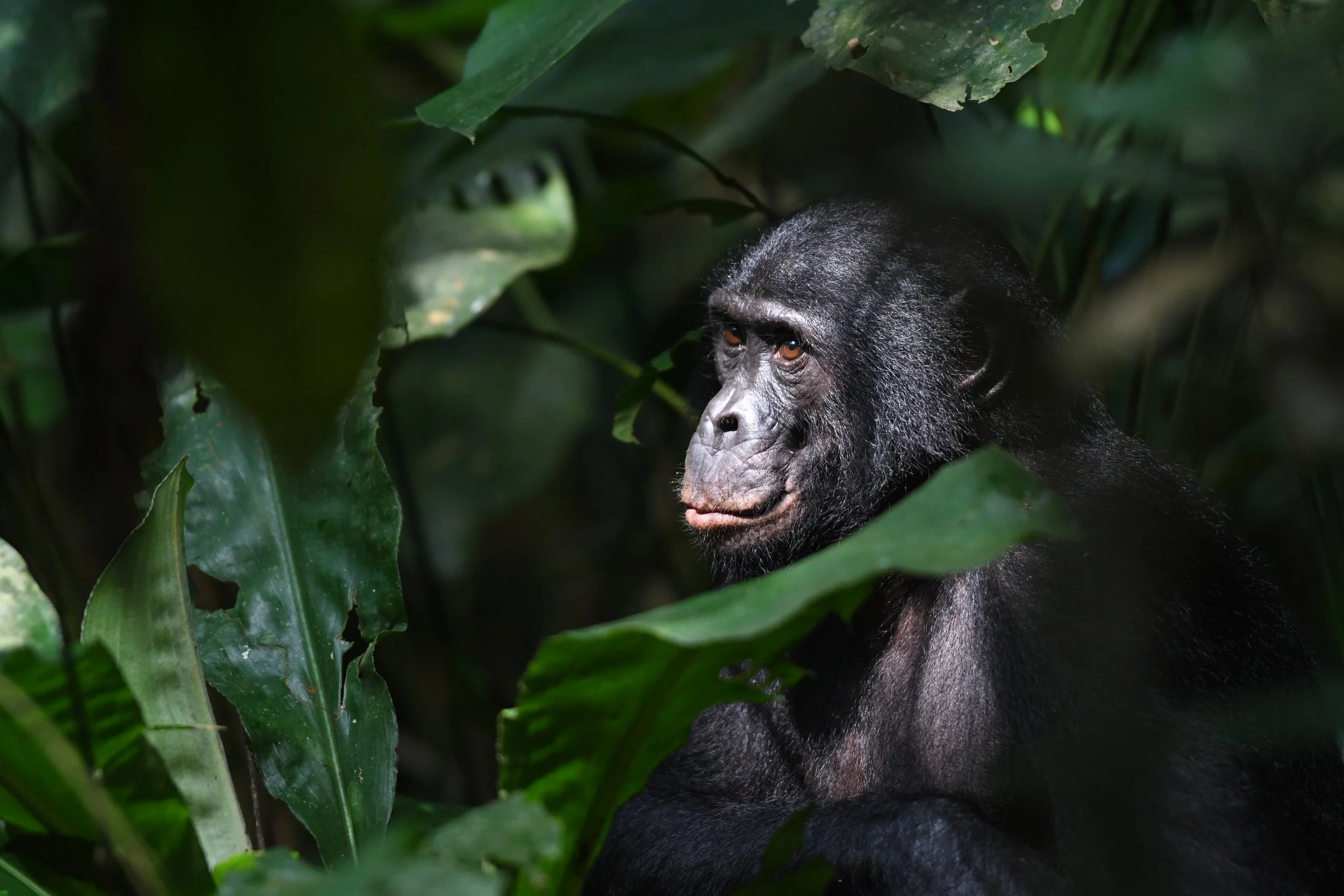
“The findings from the bonobos at Kokolopori help us to reimagine human society --
they are a singular species of hope.”
Investing in the Community
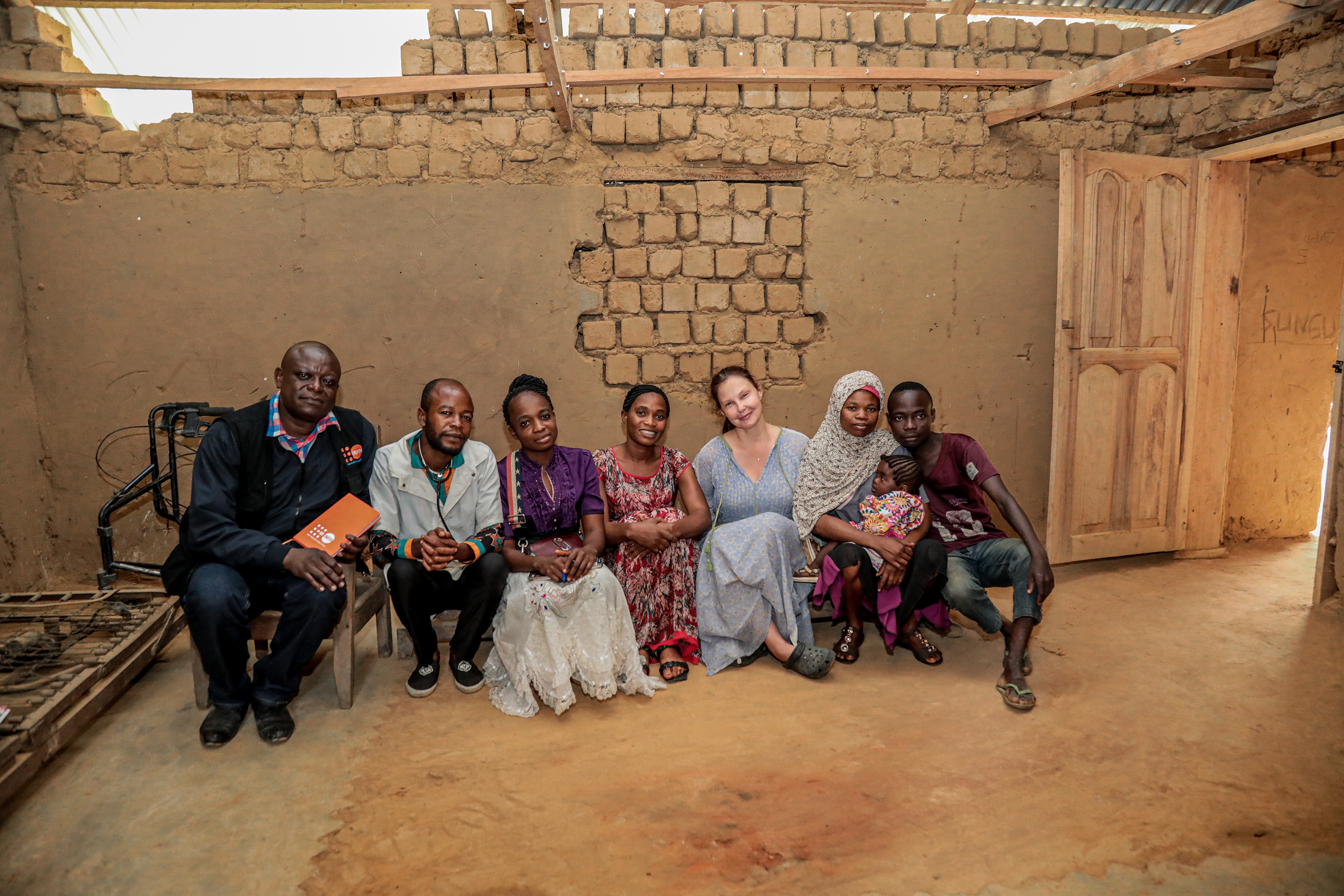
Providing the funds, we support the local population in investing their own labor, both physical and emotional, in building the schools for their respective communities.
Led by Ashley Judd, the community work will provide scholarships, especially for girls, who already have low status and are socially vulnerable. Education is crucial to improve their life outcomes.
We enable the five villages in whose ancestral forest the bonobos range, to build their own schools and educate the next generation.
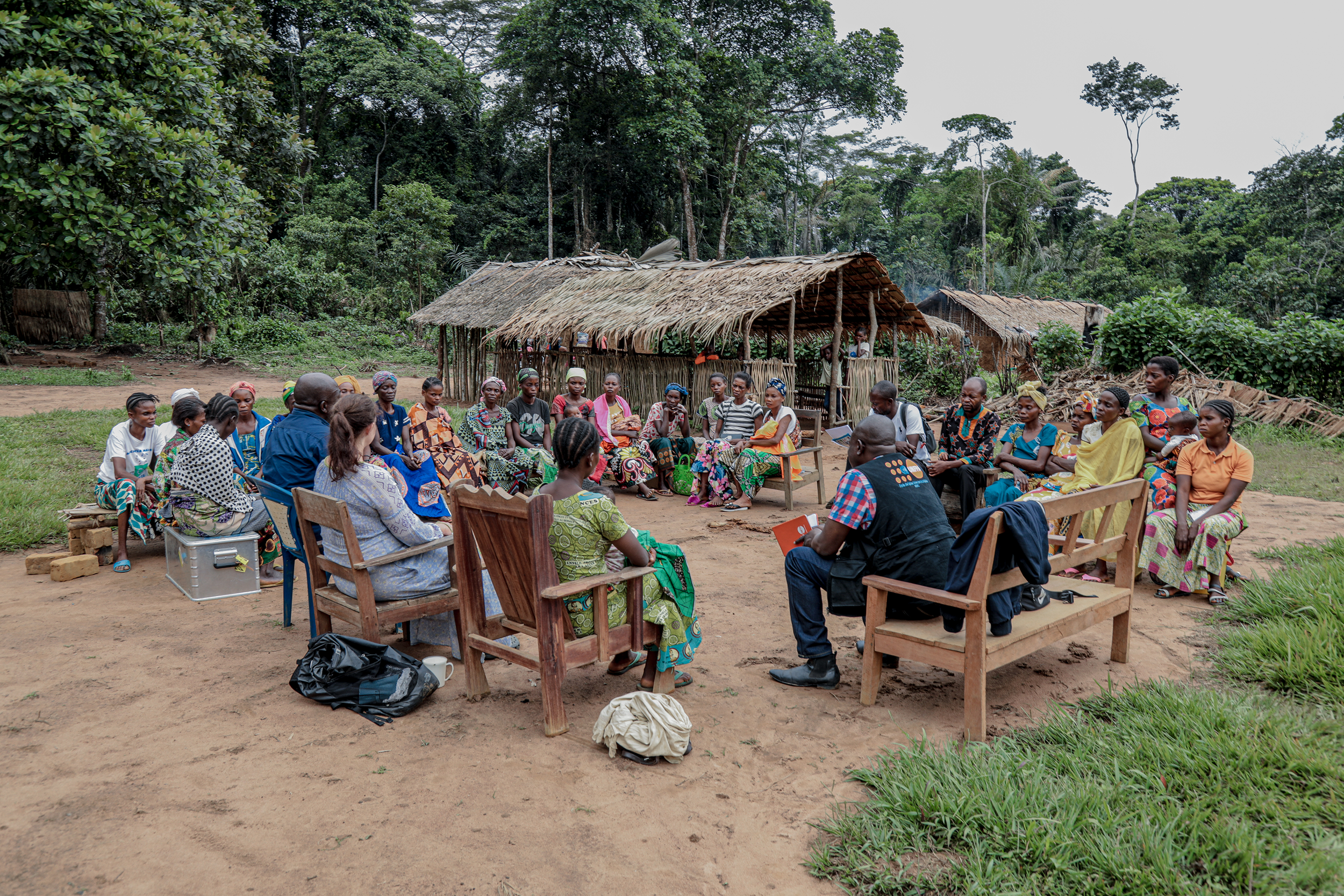
The girls and women of Kokolopori have very low status, poor health, high mortality rates, and routinely experience violence. Pregnancies begin as early as twelve. With the permission of the tribal chiefs and clan elders, Ashley and UNFPA brought to the village for the first time gynecologist/obstetrician to consult and is now training a midwife who will live in the community full-time. We are installing a maternal health clinic, provisioning modern family planning in response to local expressed desire, and creating behavior change communications through local peer education. Our approach is that we are in partnership with the villages, informed and guided by their sharing circles.
Press Highlights
The latest on our research
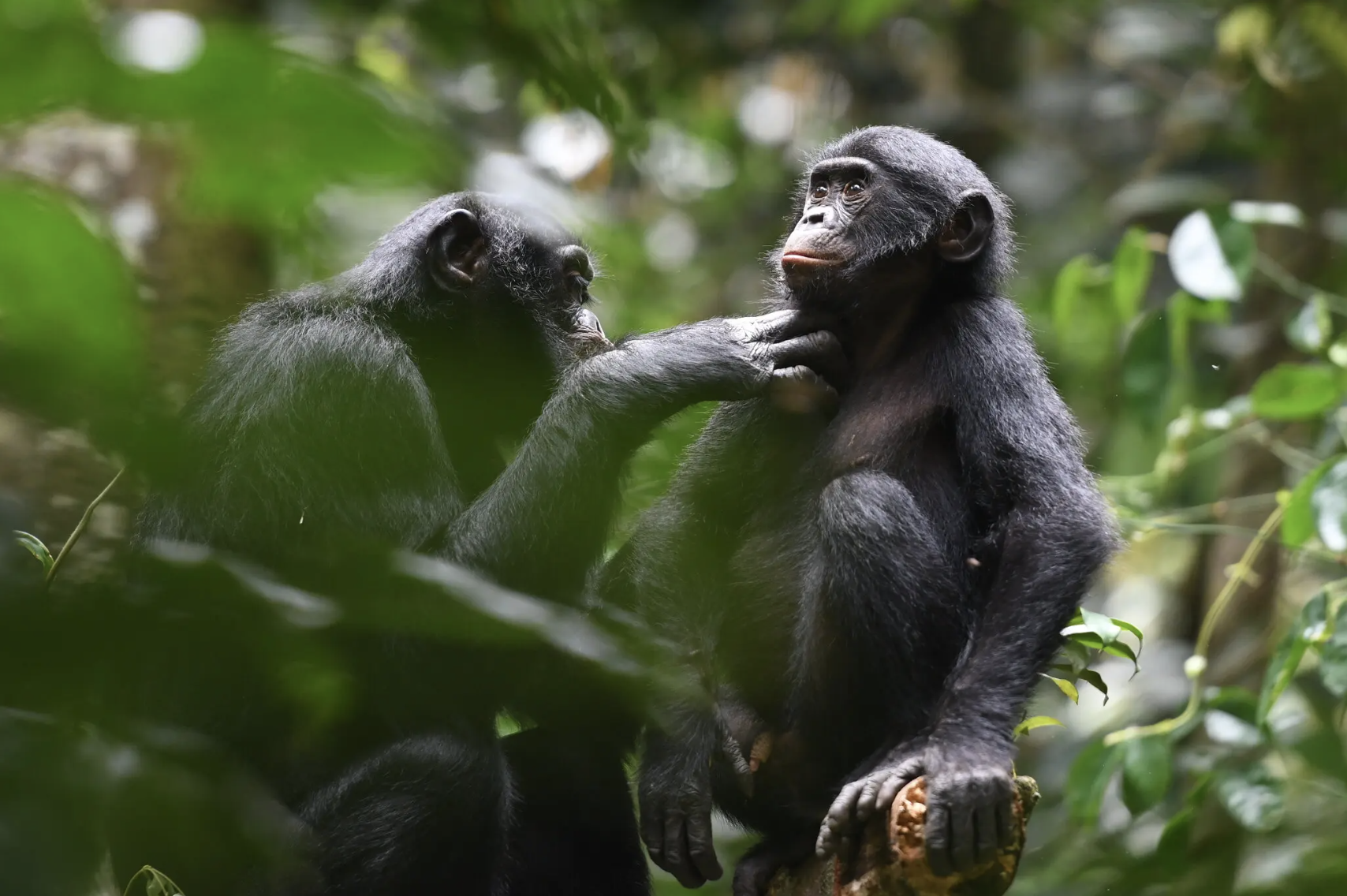
Scientists Find First Evidence That Groups of Apes Cooperate
New York Times
Unlike chimps, bonobos offer hope that maybe we can all get along
NPR

Cooperation Across Social Borders in Bonobos
Science.org